Power module design has evolved dramatically over the past decade, driven by demands for higher power density, improved efficiency, and enhanced reliability across applications ranging from renewable energy systems to electric vehicles and industrial automation. At the core of any robust power module design lies a comprehensive protection strategy that safeguards expensive semiconductor components from destructive fault conditions. While engineers invest considerable effort optimizing thermal management, gate drive circuits, and layout considerations, inadequate fuse protection can undermine even the most sophisticated designs, leading to catastrophic failures and costly field returns.
The financial and operational stakes of proper fuse integration cannot be overstated. A single unprotected fault in a multi-kilowatt power module can cascade through the system, destroying not only the initially failed semiconductor but also adjacent devices, DC link capacitors, gate drive electronics, and even PCB traces. Repair costs for such failures often exceed ten times the value of the original failed component, while system downtime compounds losses through production interruption or service unavailability. This economic reality drives the adoption of advanced semiconductor fuse protection as a fundamental design requirement rather than an optional enhancement. Modern power modules increasingly incorporate integrated fuse protection, with module manufacturers and system designers collaborating to specify fusing solutions that provide optimal protection while minimizing parasitic effects on normal operation.
Effective fuse integration begins with comprehensive understanding of both power module characteristics and fuse operating principles. Engineers must recognize that semiconductor fuse behavior differs fundamentally from conventional circuit protection, with response times measured in microseconds and I²t characteristics optimized for power semiconductor protection rather than general overcurrent protection. The fuse must respond faster than the semiconductor’s thermal time constant—typically 1-10 microseconds for modern IGBTs and MOSFETs—while limiting let-through energy below the device’s surge current capability. This demanding requirement necessitates careful analysis of fault current paths, short-circuit current magnitudes, and the dynamic interaction between fuse operation and module behavior during fault clearing.
Module Architecture and Fuse Placement Strategies
The physical integration of fuses within or adjacent to power modules significantly influences both protection effectiveness and overall system reliability. Several architectural approaches have emerged, each offering distinct advantages and trade-offs.
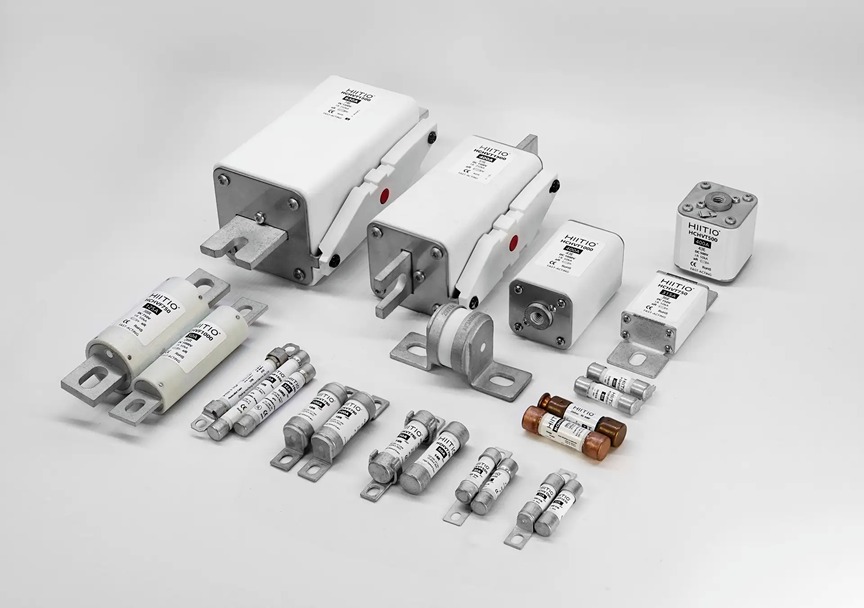
Externally mounted fuses represent the traditional approach, with discrete fuses installed in series with module DC bus connections. This configuration provides several benefits:
- Easy replacement after fault events without requiring module disassembly or replacement
- Flexibility to modify fuse ratings during system commissioning or after operational experience
- Compatibility with standard fuse form factors and readily available replacement parts
- Simplified thermal management as fuse dissipation occurs outside the module package
- Clear visual indication and accessibility for maintenance procedures
However, external fusing introduces parasitic inductance in the DC bus path, potentially contributing to voltage overshoots during switching transitions. Connection resistance at fuse terminals adds to conduction losses and creates additional points for potential failure through loosening or corrosion. The physical separation between fuse and protected semiconductor also slightly reduces protection speed, though this effect typically remains negligible compared to overall fault clearing time.
Module-integrated fuses embedded within the power module package offer maximum protection speed and minimum parasitic effects. Benefits include:
- Shortest possible current path between fuse and protected semiconductor, minimizing inductance
- Elimination of external connections that could loosen or corrode over operational lifetime
- Optimal thermal coupling between fuse and module, enabling coordinated thermal management
- Reduced system assembly complexity and potential installation errors
- Compact overall footprint supporting high power density designs
The primary disadvantage involves replacement complexity, as integrated fuses typically require module replacement after operation. Some advanced module designs incorporate replaceable fuse elements accessible through the module housing, though this approach increases module cost and complexity.
Hybrid configurations employ both module-integrated fast-acting fuses for semiconductor protection and external slower fuses for DC bus protection, creating coordinated protection layers. This approach optimizes each protection stage for its specific function while maintaining appropriate selectivity.
Electrical Parameter Coordination
Achieving reliable protection requires precise coordination between multiple electrical parameters that govern both normal operation and fault response.
Voltage rating adequacy must account for the complete system voltage range. For modules operating with DC link voltages of 600-800V typical in three-phase industrial applications, fuse voltage ratings of 900-1000V DC provide adequate margin. Renewable energy applications with higher DC bus voltages may require 1200-1500V rated fuses. Critical considerations include:
- Transient overvoltages during load switching or regenerative braking events
- Voltage rise rate during fuse interruption, which can approach several kV/μs
- Aging effects that may slightly reduce fuse voltage withstand over time
- Altitude derating factors for installations above 1000 meters elevation
Current rating selection balances protection sensitivity against nuisance tripping. The fuse rated current typically ranges from 1.2 to 1.5 times the module’s maximum continuous output current, accounting for:
- RMS current including fundamental and high-frequency switching components
- Pulse loading from motor starting, capacitor inrush, or other transient conditions
- Harmonic current content that increases RMS value above fundamental frequency calculation
- Thermal cycling effects on both fuse and module temperature rise
- Manufacturing tolerances in both fuse and module specifications
I²t coordination represents the most critical design parameter. The fuse must clear faults before semiconductor junction temperature reaches destructive levels. For IGBT modules rated at 600A, typical semiconductor I²t limits range from 10,000 to 30,000 A²s depending on chip technology and packaging. The selected fuse should provide maximum I²t values of 50-70% of the semiconductor limit across all prospective fault currents, ensuring adequate protection margin considering manufacturing variations and aging effects.
Thermal Considerations and Power Dissipation
Fuse power dissipation, though relatively modest compared to semiconductor losses, requires careful thermal analysis to prevent premature aging or unexpected operation.
Normal operating losses in the fuse element typically range from 5-30W depending on fuse rating and load current. This dissipation contributes to overall module thermal load and must be included in cooling system capacity calculations. For air-cooled modules, fuse temperature rise above ambient typically ranges from 20-40°C at rated current. Liquid-cooled modules may achieve lower fuse temperatures through more effective heat removal, potentially enabling operation at higher current levels or extending fuse operational life.
Thermal coupling effects between module and fuse can create feedback loops affecting both components. Hot module temperatures elevate fuse temperature, reducing fuse current capacity through thermal derating while potentially bringing the fuse closer to its clearing threshold. Conversely, excessive fuse temperature rise indicates high connection resistance or overcurrent conditions that may stress the module. Thermal monitoring of both components enables predictive maintenance strategies that prevent unexpected failures.
Cooling airflow management must ensure adequate ventilation across fuse surfaces. Obstructed airflow or poor ventilation design can create localized hot spots that accelerate fuse aging and reduce reliability. CFD analysis during module design optimizes air passages and heat sink geometries to maintain uniform temperature distribution across all critical components including fuses.
Dynamic Behavior During Fault Conditions
Understanding fuse and module interaction during fault events enables designers to optimize protection coordination and minimize collateral damage.
Fault current evolution follows predictable patterns depending on fault type and location. Short circuits across IGBT collector-emitter terminals produce extremely high initial current—often 10-20 times rated current—limited only by DC bus impedance and gate drive saturation. The IGBT remains in saturation for several microseconds before desaturation occurs, during which time fault current magnitude is determined primarily by external circuit impedance. Proper fuse selection ensures clearing occurs before IGBT desaturation would expose the device to excessive voltage and current simultaneously.
Arc voltage effects during fuse operation temporarily elevate DC bus voltage due to the arc voltage adding to system voltage. For 1000V rated fuses, arc voltage during interruption can reach 1200-1500V, creating voltage stress on parallel-connected modules or capacitors. Surge protection devices (MOVs or TVS diodes) limit these transients to safe levels, protecting system components from overvoltage damage during fuse operation.
Energy absorption by fuses prevents this destructive energy from dissipating in the failed semiconductor. The silica sand filling characteristic of semiconductor fuses absorbs arc energy through melting and vaporization, safely containing the fault clearing process within the fuse body. Proper fuse mounting and clearances ensure that hot gases vented during operation do not impinge on adjacent components or create secondary faults.
Successful power module design recognizes proper fuse protection not as an afterthought but as an integral element of the overall design strategy. By carefully considering fuse selection, placement, coordination, and testing from the earliest design stages, engineers can deliver power modules that combine high performance with exceptional reliability, meeting the demanding requirements of modern power conversion applications while minimizing total cost of ownership through reduced field failures and extended operational life.