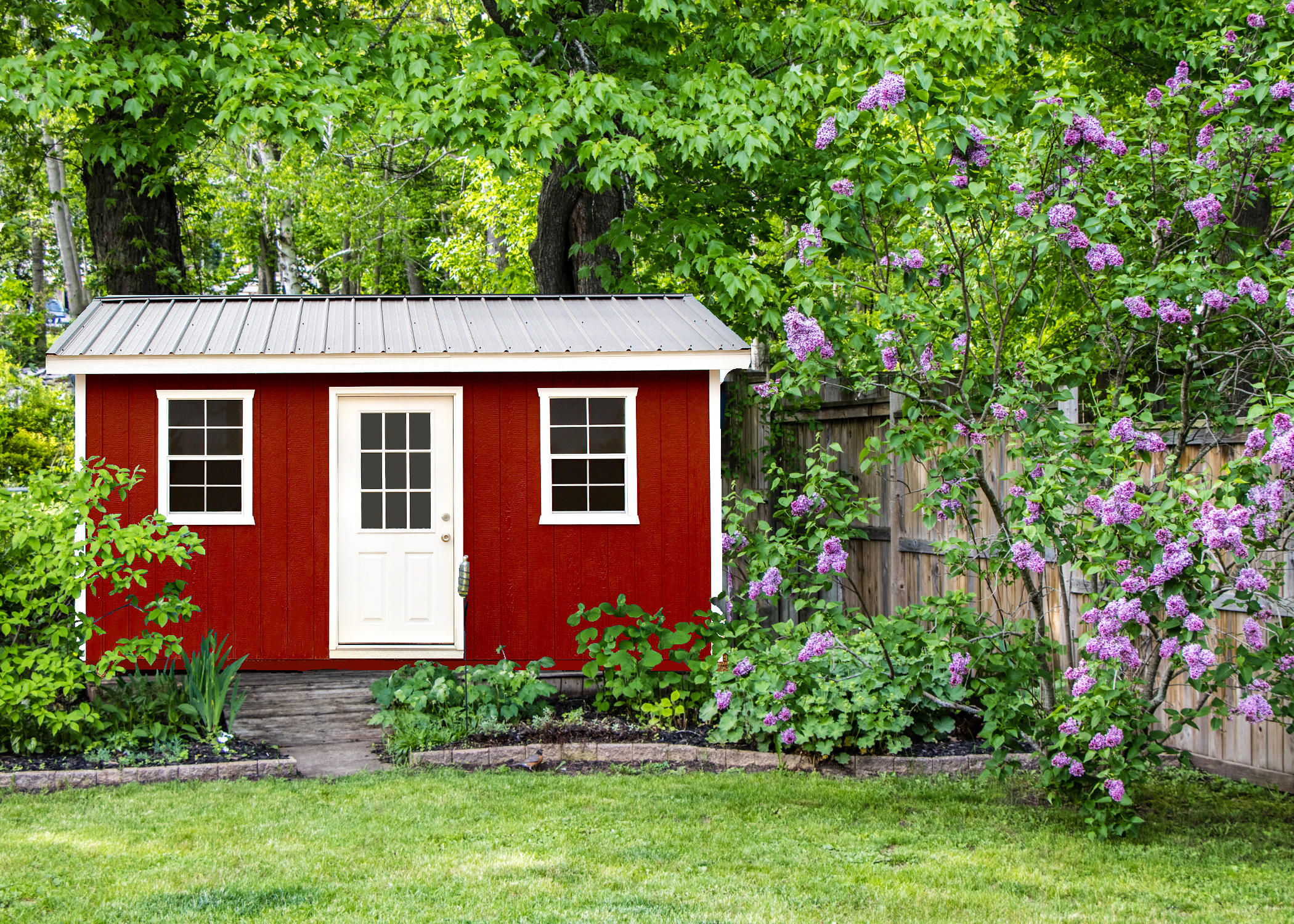
Let’s be honest, not everyone’s blessed with a sprawling garden where you can plonk down whatever size shed takes your fancy. Most of us are working with compact yards, narrow side passages or modest patches of grass where every square metre counts. That’s exactly where small garden sheds come into their own, and trust me, they’re far more versatile than you might think.
I’ve got a tiny shed tucked in the corner of my courtyard garden, barely bigger than a wardrobe really. But it’s transformed how I use my outdoor space. Before I had it, there were bikes leaning against the wall, garden tools scattered in the kitchen, and bags of compost stacked by the back door making the place look like a building site. Now everything’s contained, organised, and my garden actually feels like a garden rather than a storage depot.
Making Every Centimetre Count
The beauty of small garden sheds is they’re designed with space efficiency at their core. We’re not talking about those massive structures that dominate your garden and block all the light. These are compact units, typically between 4×3 feet and 6×4 feet, that slot into awkward corners, sit along fence lines or tuck behind the garage without overwhelming your outdoor space.
What surprises people is just how much you can fit inside a well-designed small shed. Proper internal shelving, wall hooks and thoughtful layout mean you can store mowers, tools, pots, cushions and all sorts without it becoming a chaotic jumble. My neighbour’s got a 5×3 shed that houses her entire gardening kit, including a small workbench. It’s like a TARDIS, genuinely holds way more than you’d expect from the outside.
The key is thinking vertically. Floor space might be limited but walls are your friend. Mount tools on pegboards, install high shelves for rarely used items, and use the door backs for hanging storage. Suddenly that compact footprint becomes surprisingly capable.
Planning Permission Isn’t Usually Needed
Here’s something that puts a lot of people off larger sheds, the planning permission headache. But with small garden sheds UK regulations are actually quite generous. Generally, if your shed is under 2.5 metres tall and takes up less than half your garden, you won’t need permission. It counts as “permitted development,” which basically means you can crack on without getting the council involved.
Obviously there are exceptions, listed buildings, conservation areas, if you’re planning to use it as living space, but for most people buying small garden sheds for sale, it’s a straightforward process. Check your local regulations obviously, but chances are you can have your shed up and running within days rather than waiting months for permissions.
This simplicity is brilliant for renters too. A small shed can potentially be classed as a temporary structure, making it easier to get landlord approval. And if you need to move, many compact sheds can be dismantled and reassembled at your new place. Try doing that with a brick outhouse.
Budget-Friendly Storage Solutions
Let’s talk money, because this matters. Small garden sheds are significantly cheaper than their larger cousins, both in initial cost and ongoing expenses. A decent quality small shed might set you back £200 to £600 depending on materials and features, whilst larger sheds easily run into thousands.
Lower cost doesn’t mean lower quality though. Small modern garden sheds often use the same materials and construction techniques as bigger versions, you’re just buying less of them. Pressure-treated timber, proper roofing felt, sturdy frames, it’s all there, just in a more compact package.
The savings extend beyond purchase price too. Smaller structures need less maintenance. There’s less roof to re-felt, less timber to treat, fewer hinges to oil. The annual upkeep that can feel like a weekend-consuming project on a large shed becomes a couple of hours on a small one. And if something does need replacing, a door, a window, the smaller scale means replacement parts are cheaper.
Versatility Beyond Simple Storage
Small garden sheds aren’t just about hiding the lawnmower, they can serve all sorts of purposes. I know someone who’s converted theirs into a potting shed with a small work surface and tool storage. It’s become her happy place for propagating plants and winter sowing, separate from the main garden but right there when she needs it.
Others use them as bike storage, keeping expensive bicycles secure and dry without cluttering hallways or garages. For families with kids, they’re perfect for storing outdoor toys, paddling pools, sports equipment, all that stuff that multiplies mysteriously over summer. Some people even use them as mini workshops for hobbies, there’s just enough room for a workbench and tool storage if you’re into woodworking or crafts.
The compact size actually works in your favour here. It forces you to stay organised and focused on what you actually need in the space. No room for accumulating junk like happens in larger sheds where things pile up until you can’t find anything. A small shed stays purposeful.
Quick and Easy Installation
Nobody wants to spend three weekends building a shed, honestly. Small garden sheds typically arrive in manageable sections that two people can assemble in an afternoon. The smaller components are easier to manoeuvre, you’re not wrestling with massive wall panels or enormous roof sections that need four people to lift.
Many small modern garden sheds come as pre-fabricated panels that simply bolt together. The instructions are straightforward, and you don’t need specialist tools or skills. A drill, some spanners, a spirit level, and you’re sorted. I put mine up with my dad one Saturday morning, had it done by lunchtime with a tea break in the middle.
The base preparation is simpler too. You’re levelling and preparing a smaller area, which means less digging, fewer paving slabs or less concrete needed. Some people use adjustable plastic shed bases that sit straight on grass or gravel, making installation even easier. The whole process from delivery to usable shed can happen in a single day.
Less Visual Impact, More Garden Enjoyment
One concern people have about adding any structure to a small garden is that it’ll dominate the space and make everything feel cramped. But small garden sheds, when positioned thoughtfully, actually enhance small gardens rather than overwhelming them.
Tuck one against a fence line and paint it in a complementary colour, it becomes part of the garden’s backdrop rather than a focal point. Some people go for small modern garden sheds with living roofs planted with sedums, which look gorgeous and help the structure blend into the planting scheme. Others train climbing plants up the sides, roses, clematis, jasmine, turning the shed into a vertical garden feature.
The modest footprint means you’re not losing significant growing space or seating areas. In fact, by getting tools and clutter out of sight, your garden often feels bigger and more usable afterwards. It’s the same principle as decluttering your home, removing visual chaos creates a sense of space.
Perfect for Side Passages and Awkward Spots
Most gardens have at least one awkward spot that’s difficult to use effectively. That narrow passage down the side of the house, the weird triangular bit where the fence meets the garage, the space behind the wheelie bins. These dead zones are perfect for small garden sheds.
Standard sheds won’t fit in these spaces but compact models are specifically designed for tight spots. You can find narrow designs perfect for side passages, measuring just 2 feet deep but 6 feet long, ideal for storing tools, bikes or garden equipment in otherwise wasted space. L-shaped gardens often have that awkward back corner, pop a small shed there and you’ve turned a problem area into a practical asset.
Access is usually easier too. Moving a large shed into a back garden can mean dismantling fence panels or navigating through the house. Small sheds can typically be carried through side gates or even through the house if necessary, though obviously that depends on your specific layout.
Weatherproofing is Simpler
Keeping your stuff dry and secure is the whole point of having a shed, right? With small garden sheds, weatherproofing is more straightforward than larger structures. There’s less roof area where leaks can develop, fewer panels where water might penetrate, and you can inspect the whole thing properly in about ten minutes.
Treating the timber is a manageable task rather than a whole weekend project. One tin of preservative usually covers the entire shed, and you can do the whole job in an hour or two. This means you’re more likely to actually do the maintenance rather than putting it off because it feels overwhelming.
Modern small sheds often come with better weatherproofing features as standard. Proper floor joists that lift the floor off the ground, preventing damp and rot. Tongue and groove cladding that interlocks securely against wind and rain. Quality roofing felt that’s actually secured properly rather than just tacked on. Because the overall cost is lower, manufacturers can include these features without pricing themselves out of the market.
Flexibility for Future Changes
Gardens evolve, don’t they? What you need today might not be what you need in five years. Maybe you’ll take up a new hobby, downsize, or change how you use your outdoor space. Small garden sheds offer flexibility that larger permanent structures don’t.
Moving or relocating a small shed is feasible if your garden layout changes. You’re not locked into that corner forever if you decide you’d rather have a seating area there instead. Some small modern garden sheds are even designed to be modular, you can add extensions or modify them as your needs change.
And if you do eventually move house, there’s the option to take your shed with you. It’s not something people often think about, but if you’ve invested in a quality small shed and it’s serving you well, why leave it behind? Disassemble it, transport it, set it up in your new garden. Try doing that with a massive 10×8 shed.
Security Without Fortress Aesthetics
You want to keep your stuff safe but you don’t want your garden looking like Fort Knox. Small garden sheds can be secured properly without becoming eyesores. A decent padlock, maybe some security hinges, and you’ve got reasonable protection for your belongings.
The compact size actually works in your favour here. There’s less surface area for potential break-ins, fewer windows to be concerned about, and they’re often positioned close to the house where they’re naturally more visible and secure. Position yours where you can see it from the house and it adds another layer of security through natural surveillance.
Some small modern garden sheds come with integrated security features, reinforced doors, concealed hinges, lock-ready hasps. Because they’re typically storing less valuable items than larger sheds, the security requirements are proportionate rather than excessive.
Making the Most of Limited Space
At the end of the day, small garden sheds are about being realistic and practical. If you’ve got a compact garden, you need storage that works with your space rather than against it. These sheds deliver exactly that, proper weatherproof storage without sacrificing your entire outdoor area.
They prove you don’t need a massive garden to have organised, functional outdoor storage. Whether you’re in a terraced house with a postage-stamp yard, a flat with a small patio, or a cottage with a courtyard garden, there’s a small shed solution that’ll work for you.
The trick is choosing one that matches your actual needs rather than some idealised version of what you think you should have. Measure your space, list what you need to store, and pick accordingly. Your garden will thank you for it.