
Blog
History And Evolution Of NEMA 5-15R Standard

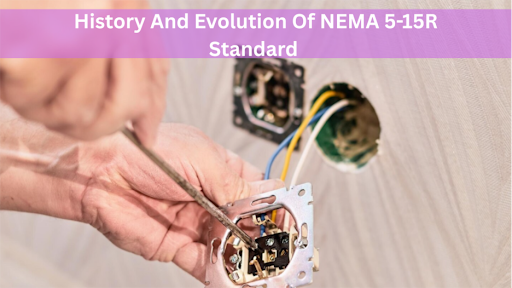
When you look at a regular electric socket, it usually doesn’t seem particularly special or extraordinary. However, confusion soon comes into the picture when compatibility problems occur, equipment does not boot up properly, or there is a question of safety.
Such instances tend to lead back to the misconception of the way electrical standards evolved. NEMA 5-15R is one of those standards that are at the center stage in day-to-day power connections in homes and workplaces.
Its existence is something unseen, just because it works effectively. Nevertheless, such reliability did not come overnight. It was the result of years of development, safety education, and industry collaboration.
By knowing how NEMA 5-15R was developed, you will be able to recognize why it is still relied on and how it is still influencing the current power systems. This article delves into that journey.
1. Early Demand for Electrical Standardization
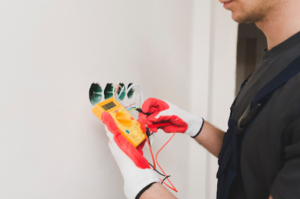
Older electrical systems were confusing to both users and installers. Buildings were based on irregular plug styles, incompatible voltage ratings, and ineffective grounding. Relocating equipment to another station could easily cause a power cut or lead to accidents.
With electricity becoming a necessity in day-to-day activities, such issues cannot be overlooked anymore. Engineers and manufacturers started driving towards integrated solutions that would eliminate the guesswork of power connections.
In this movement, a standardized receptacle, NEMA 5-15R, was developed for 125-volt, 15-amp applications. Its grounding structure and blade arrangement were defined, considering compatibility and protection issues.
This standard enabled the use of devices across various environments by creating predictable electrical properties that ensured high levels of safety. With growing adoption, electrical systems became easier to design, install, and maintain, and formed the basis of contemporary power distribution.
2. Development of NEMA Classification Framework
With the growth of electrical networks, there was a need to classify them to clarify them. The National Electric Manufacturers Association came up with a systematic structure according to which plugs and receptacles were grouped in terms of voltage, amperage, and grounding characteristics.
This system minimized confusion of similar connectors visually and minimized errors during installation. NEMA 5-15R fits best under series five, which involved grounded 125-volt receptacles.
Its 15-amp capacity was in line with domestic appliances and commercial lighting equipment. Correct orientation was guaranteed by flat-blade orientation, and a protective path was provided by the grounding slot against fault currents.
This system of classification enhanced trade communication. There would be no confusion as electricians, inspectors, and engineers would be able to determine compatible components.
Consequently, there were standardized rules in installations, which enhanced safety compliance and reliability in both residential and commercial electrical systems.
3. Safety Improvements Through Design Evolution
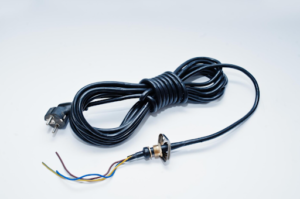
Safety was also of primary concern in the development of NEMA 5-15R. The early outlets were not grounded, so the risk of electrical shock and damaged equipment was high. With more complex devices that were consuming more power, grounding was no longer an option.
NEMA 5-15R design incorporated grounding directly into the receptacle structure, which enhanced protection to the user. Blade distance and form were also perfected to eliminate wrong insertion and minimize accidental contact.
Enhanced contact stability reduced arcing, overheating, and wear in the case of repeated use. The improvement in the material also enhanced durability, and the receptacles served for long service with reliability.
Along with these improvements, electrical codes were developed to support safe installation practices. Experience with failure in the real world led to improvements, and NEMA 5-15R was designed to be a reliable interface that balances simplicity and robust safety in a wide range of environments.
4. Expansion Across Residential and Commercial Environments
As reliability and safety became consistent, NEMA 5-15R adoption expanded steadily across residential and commercial environments. Homes relied on it for everyday appliances, while offices, schools, and healthcare facilities adopted it for predictable performance and ease of installation.
Because the receptacle followed a familiar format, electricians required minimal retraining, which reduced labor complexity and installation errors. This widespread familiarity encouraged uniform power layouts across different building types.
Flexibility also supported expansion. NEMA 5-15R worked seamlessly with various power cord configurations while maintaining a standardized connection point. This allowed equipment manufacturers and facility managers to support diverse devices without introducing compatibility risks.
Maintenance operations benefited as well. Replacement receptacles and cords remained readily available, reducing downtime and simplifying repairs. As infrastructure expanded, NEMA 5-15R became a dependable foundation for scalable electrical systems.
5. Importance Within Modern Power Systems
Within modern power systems, NEMA 5-15R continues serving as a critical interface between electrical infrastructure and everyday equipment. Despite advancements in smart devices and energy-efficient technology, many applications still depend on grounded 15-amp connections for safe operation.
NEMA 5-15R supports these needs through stable performance and consistent electrical characteristics. Compliance with current electrical codes reinforces its role in safe installations, while familiar design reduces inspection challenges and wiring errors.
Modern power cords and equipment continue to rely on this standard because it balances accessibility with protection. While specialized connectors address higher power or unique requirements, NEMA 5-15R remains essential for general-purpose applications.
Its continued relevance demonstrates how a well-engineered standard adapts to evolving technology without sacrificing reliability, safety, or user confidence.
Conclusion
NEMA 5-15R represents more than a simple outlet design. It reflects decades of learning, refinement, and collaboration aimed at making everyday power safe and reliable.
From early challenges of inconsistent systems to modern expectations of seamless connectivity, this standard adapted without losing purpose. Its success lies in practical engineering choices grounded in real-world use.
When you understand the history behind NEMA 5-15R, you see why it remains trusted across homes and industries. That quiet reliability explains why it continues powering daily life without demanding attention.

Wall Sign: The Complete Guide to Choosing the Perfect Sign for Your Business

Business Professionals: Key Considerations for Microsoft Teams Integration

Stretch Fit Gym Shirts for Weightlifting and Bodybuilding | ironpandafit

Why Personalized Nutrition Support Is Important for Saskatchewan Residents

Trusted PCB Manufacturer for Startups FastTurnPCB

The “Fast Reply” Rule: Why Speed Wins More Opportunities Than Talent

The Data “Translator”: Turning Physiological Signals into Winning Decisions

A Hiker’s Guide to Dog Hiking Boots

How to Become an NLP Practitioner: UK Training & Certification Guide

Why Foot Health Matters More As We Age – And How the Right Fit Helps

Who Is Kate Garraway New Partner? The Truth Revealed

Brandi Raines Net Worth 2025: Age, Bio, Career, Husband and Children

Betsy Grunch Net Worth 2025: Salary, Career, Husband, and Life Story

Salma Shah Biography: Age, Career, Net Worth, Husband and Children

Nomia Iqbal Biography: Age, Husband, Career, Net Worth and BBC Journey

Kay Crewdson Biography: Age, Date Of Birth, Husband, Children, and Net Worth

Sophia Wenzler Biography: Age, Date of Birth, Husband, Career Story, and Net Worth

Ági Barsi’s Untold Story: Sister Of Judith Barsi And Her Battle With Cancer

Mike Danson Biography: Age, Net Worth, Wife, Children and Full Story

What Is eTarget Limited? The Truth Behind Those Mystery Parcels
Wall Sign: The Complete Guide to Choosing the Perfect Sign for Your Business
Business Professionals: Key Considerations for Microsoft Teams Integration
Stretch Fit Gym Shirts for Weightlifting and Bodybuilding | ironpandafit
Why Personalized Nutrition Support Is Important for Saskatchewan Residents
Trusted PCB Manufacturer for Startups FastTurnPCB
The “Fast Reply” Rule: Why Speed Wins More Opportunities Than Talent
The Data “Translator”: Turning Physiological Signals into Winning Decisions
A Hiker’s Guide to Dog Hiking Boots
How to Become an NLP Practitioner: UK Training & Certification Guide
Why Foot Health Matters More As We Age – And How the Right Fit Helps
-
 News5 months ago
Who Is Kate Garraway New Partner? The Truth Revealed
-
 Net Worth11 months ago
Brandi Raines Net Worth 2025: Age, Bio, Career, Husband and Children
-
 Net Worth11 months ago
Betsy Grunch Net Worth 2025: Salary, Career, Husband, and Life Story
-
 Biography10 months ago
Salma Shah Biography: Age, Career, Net Worth, Husband and Children