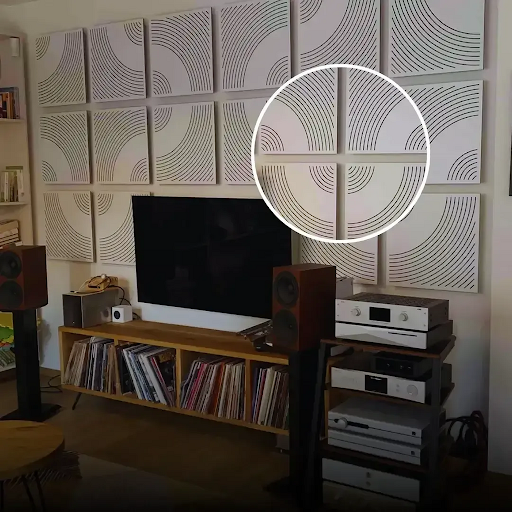
Renters can make a noisy flat more peaceful by separating the problem into three questions: what can be changed without permission, what should be reported as a repair, and what requires action against an external noise source. This prevents tenants from paying for ineffective materials or altering parts of the property they do not control. The most effective route therefore depends as much on responsibility and tenancy rights as it does on acoustics.
When a Rented Flat Does Not Feel Restful
A flat can become difficult to rest in when conversations pass through a shared wall, footsteps arrive from the ceiling, traffic enters through the windows, or voices from the communal hallway remain audible behind the front door. Plumbing and building services can create a different problem, with intermittent knocks, rushing water, or vibration disturbing sleep even when neighbours are quiet.
Renters have less control over these problems than homeowners. They can rearrange furniture or add removable materials, but replacing windows, rebuilding separating walls, altering floors, upgrading entrance doors, or installing permanent soundproofing normally involves parts of the property they do not own. Repairs should also remain with the responsible party unless the tenancy agreement clearly permits the tenant to carry them out.
This means the first task is to choose the correct response:
- Acoustic treatment controls reflections within the flat. It can make speech clearer and reduce the hollow quality of sparsely furnished rooms.
- Soundproofing reduces transmission through walls, floors, ceilings, doors and windows. It usually involves the building fabric and therefore often requires permission.
- Noise management makes sound less intrusive when the source cannot be removed. Moving the bed away from a party wall, changing how a room is used, or introducing controlled background sound can improve daily comfort without altering the structure.
Reversible measures can improve the way a rented flat feels, but they cannot repair a defective window, isolate an inadequately constructed floor, or stop vibration from communal machinery. Those problems may require the landlord, managing agent, freeholder, neighbour or local council, depending on who controls the source and the affected part of the building.
In England, official guidance says tenants should carry out repairs only where their tenancy agreement permits it and cannot be made responsible for repairs that belong to the landlord. Councils must investigate complaints that could amount to a statutory noise nuisance, although this route applies to substantial or unreasonable interference rather than every sound heard between flats.
Identify the Noise Before Spending Money
Noise should be classified before any solution is chosen. Two sounds may seem equally disruptive but require completely different responses depending on how they enter the flat and which building elements carry them.
The four main categories are:
- Airborne noise includes speech, television, music, barking and road traffic. It may enter through walls, windows, doors, gaps or ventilation routes.
- Impact noise begins with direct contact against the building, such as footsteps, dropped objects or chairs moving across a hard floor. The impact creates vibration that travels through the structure.
- Structure-borne noise comes from equipment or services connected to the building, including lifts, pumps, boilers, plumbing and mechanical systems.
- Internal reverberation is sound reflecting around the renter’s own room. Bare walls, hard floors and limited furniture make voices, television sound and daily activity linger for longer.
A short investigation can reveal what to do. Walk through the flat while the noise is present and listen closely to shared walls, windows, doors, sockets, skirting boards and pipe penetrations. The loudest visible surface is not always the main route, so compare several points rather than stopping at the first wall that seems responsible.
Close one window or internal door at a time and listen for a clear change. If traffic noise drops sharply when a particular door closes, the door may be separating a quieter part of the flat from a weak external opening. If the sound stays almost unchanged across several rooms, it may be travelling through the structure or a shared service route.
Keep a brief record of:
- When the sound begins and ends;
- Which room is most affected;
- Where it sounds strongest;
- Whether it is continuous, intermittent or linked to an activity;
- Whether it changes when doors, windows or appliances are operated;
- Whether it sounds clearer through the air or feels like vibration through a surface.
This information helps distinguish a repair issue from a behaviour problem or a structural limitation. It is also more useful to a landlord or soundproofing experts than a general statement that the flat is noisy.
For example, a renter may assume that traffic passes through the entire external wall. Testing the room may show that most of the noise enters through worn window seals or a trickle vent that does not close properly. In that case, buying wall panels would leave the main transmission route untouched, while reporting the defective window could lead to a more relevant repair.
Start With Reversible Changes Inside the Flat
Renters can improve acoustic comfort without altering the building. Thick rugs with underlays can soften reflections from hard floors, while full-length curtains, upholstered furniture and other fabric elements help reduce echo. A filled bookcase against a shared wall may slightly soften higher-frequency sound, and moving a bed, desk or sofa away from the main noise path can make the affected area easier to use.
Freestanding acoustic screens and removable panels can also support work or sleep zones, provided the fixing method complies with the tenancy agreement. These measures improve sound absorption inside the flat, but they do not create structural soundproofing. Soft furnishings mainly reduce reflections and reverberation rather than stopping transmission through walls, floors or ceilings.
A thick rug, for example, may reduce movement noise and reflections within the renter’s own room. It will not stop heavy footsteps already travelling through the ceiling from the flat above. Permanent repairs or alterations should remain subject to the tenancy agreement and the landlord’s responsibilities.
Reduce Sound Leakage Around Doors and Windows
Airborne noise often enters through the smallest openings rather than passing evenly through an entire wall or window. A solid door or double-glazed window can still perform poorly if sound travels around its edges, beneath the door or through an adjacent opening.
Check the flat while the noise is present and listen around:
- The gap beneath the entrance or internal door
- The edges of the door and worn seals
- Window frames and opening sections
- Letterboxes and mail slots
- Loose frames or rattling glazing
- Pipe and cable penetrations
- Trickle vents, extractor openings and other ventilation routes
A temporary draught seal or removable door-bottom seal may reduce noise passing through a small gap, provided it does not interfere with the door’s operation. Heavy curtains can soften noise around windows, while a freestanding curtain inside a draughty entrance area may reduce the direct sound path without attaching anything permanently to the property.
Defective windows, loose frames and damaged seals should be reported rather than disguised with furnishings. The landlord is generally responsible for the structure and exterior of the property, as well as pipes and ventilation systems, so a window that does not close properly or a frame with visible gaps may be a repair issue rather than something the renter should pay to modify.
Sealing also has safety limits. Do not block trickle vents, permanent ventilation, fire doors, escape routes or communal systems. Flat entrance doors may form part of the building’s fire protection, so renters should not drill into them, alter their seals, remove self-closing devices or fit accessories that stop them closing correctly. Blocking ventilation can also contribute to poor air quality, condensation and damp.
The useful rule is to seal accidental gaps, not designed safety features. A worn window gasket and an open ventilation route may both admit noise, but only the first should normally be treated as an unwanted leak.
What Renters Should Avoid
The quickest way to waste money is to treat a noise problem before understanding how the sound travels. A foam panel attached to a shared wall may reduce echo inside the room, but it will not block voices, music or bass coming through the building structure.
Renters should also avoid:
- Drilling, glueing or permanently fixing panels without checking the tenancy agreement and obtaining written permission where required.
- Blocking trickle vents, extractor openings or other ventilation routes in an attempt to stop noise.
- Altering flat entrance doors, door closers or fire seals.
- Covering damp patches with panels or insulation before the moisture source has been identified.
- Attaching heavy boards or freestanding structures without confirming that the wall, ceiling or fixing method can support them.
- Paying for permanent soundproofing without a written agreement covering permission, cost, ownership, maintenance and removal.
- Assuming the landlord will reimburse improvements that were not approved in advance.
- Treating the most visible wall while ignoring doors, windows, floors, ceilings, sockets and flanking transmission paths.
These mistakes can leave the noise unchanged while creating damage, ventilation problems, fire-safety risks or deposit disputes. Flat entrance doors also form part of a building’s fire-safety system and should not be drilled into, altered or repaired by residents. Renters should diagnose first, request permission second, and spend money only when the proposed measure addresses the confirmed transmission path.