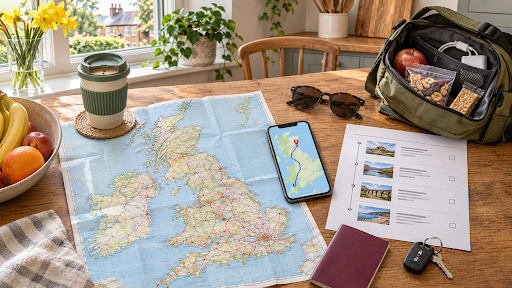
A long journey can go two ways. Either it runs smoothly and you arrive ready to enjoy the visit, the holiday or the meeting, or it becomes a tiring chain of missed connections, heavy bags and unexpected costs. The difference usually comes down to planning rather than luck.
Whether you are heading across the country for a family occasion, catching an early flight from a distant airport or moving a group between cities, a little preparation goes a long way. This guide covers how to compare your transport options, budget realistically, choose the right vehicle and book in a way that keeps the whole trip comfortable and affordable.
Plan the Whole Journey, Not Just the Main Leg
It is easy to focus on the longest part of the trip, such as the train from London to Manchester, and forget everything either side of it. Yet the journey really starts at your front door and ends at your final destination.
Before comparing prices, map out every stage:
- How will you get from home to the station, airport or motorway?
- Are there changes, and how much time is allowed between them?
- How far is your final address from the nearest station or drop-off point?
- What time do you need to arrive, and what happens if you are late?
This simple exercise often reveals hidden costs and weak points. A cheap rail fare can look less attractive once you add two local taxis and an hour of waiting for a connection.
Compare Your Transport Options Honestly
Each way of travelling has clear strengths. The right choice depends on who is travelling, what they are carrying and when they need to arrive.
Train
Rail works well for solo travellers and couples moving between city centres. Booking Advance tickets early and using a railcard where you qualify can bring fares down considerably. The drawbacks are fixed timetables, possible engineering works at weekends and the effort of carrying luggage through busy stations.
Coach
Coaches are usually the cheapest option and cover many routes that rail does not. They suit flexible travellers with light luggage, but journeys tend to take longer and stops are not always close to where you actually need to be.
Domestic Flights
For very long routes, such as London to Scotland or Northern Ireland, flying can look like the fastest option. Once you add the trip to the airport, security, the recommended arrival time before departure and the onward journey at the other end, the door-to-door time is often closer to rail than the flight time suggests. Baggage allowances and fees are also worth checking before you compare prices.
Driving Yourself
Your own car gives complete flexibility, but the true cost includes fuel, tolls, parking at the destination and wear on the vehicle. Long motorway drives are also tiring, especially if you have to drive back the same day.
Taxi or Private Hire
For door-to-door travel without the strain of driving, a long distance taxi service is worth considering, particularly for early airport departures, journeys to places with poor rail links and trips with lots of luggage. Because private hire fares are normally quoted per vehicle rather than per person, the cost can become competitive once several people share the journey.
Which Option Suits Which Trip?
The table below is a simple starting point. Your budget, timings and who is travelling will decide the final choice.
| Transport option |
Often suits |
Things to watch |
| Train |
Solo travellers and couples going city to city |
Fixed timetables, engineering works, luggage on busy platforms |
| Coach |
Budget travellers with light bags |
Longer journey times, stops away from final destinations |
| Domestic flight |
Very long routes such as London to Scotland |
Airport transfers, security time, baggage fees |
| Own car |
Flexible trips with stops along the way |
Fuel, tolls, parking and driver fatigue |
| Taxi or private hire |
Families, groups, heavy luggage, early or late departures |
Booking ahead and checking what the fare includes |
Budget Beyond the Ticket Price
The headline fare rarely tells the full story. To compare options fairly, add up everything each one involves:
- Connections at each end, such as local taxis, buses or parking
- Luggage charges, which some coach and budget services apply
- Tolls and crossing fees if you are driving or being driven
- Food and drink on longer journeys
- Time costs, such as a day of annual leave or an overnight stay because the timings do not work
When getting quotes for a private car, check whether tolls, waiting time and airport drop-off charges are included. A fixed, all-inclusive price is easier to plan around than a lower figure with extras added later.
Simple Ways to Keep Costs Down
A few habits can make a real difference to what you spend:
- Book early. Advance rail fares are released weeks ahead and are usually cheaper than buying on the day. Private hire operators also have more vehicles available when you book in good time.
- Use a railcard if you qualify. There are railcards for young people, families, seniors, couples and disabled travellers, and they reduce the cost of many fares.
- Travel off-peak. Mid-week and mid-morning journeys are often cheaper and quieter than Friday evenings and bank holiday weekends.
- Work out the cost per person. A car fare split between four or five people can compare well with several individual tickets plus local transfers.
- Compare like for like. Check that quotes cover the same vehicle size, the same pickup and drop-off points and the same extras.
- Arrange the return at the same time. It saves a second round of searching, and some operators may offer a better rate for a return booking.
Choose a Vehicle That Fits Your Group and Luggage
One of the most common planning mistakes is underestimating how much space people and their belongings take up. A family of four with holiday suitcases, a pushchair and a bag of snacks will not fit comfortably in a standard saloon, and a cramped car feels much worse three hours into a journey.
Count every passenger and every bag, including hand luggage, before booking. For families or groups of five to seven people, a 7 seater taxi keeps everyone travelling together and is often more practical than splitting into two cars. Remember that luggage space shrinks when every seat is in use, so mention bulky items such as golf bags, skis or wheelchairs when you book. For larger parties, a minibus is usually the better fit.
A Rough Guide to Vehicle Sizes
Capacities vary between models and operators, so always confirm before booking. As a general guide:
| Vehicle type |
Typical passengers |
Good for |
| Saloon |
Up to 3 |
Couples or small parties with a case each |
| Estate |
Up to 4 |
Small families with extra luggage |
| MPV or 7 seater |
5 to 7 |
Families and groups with holiday luggage |
| Minibus |
8 or more |
Larger groups, events and team travel |
| Executive car |
Up to 3 |
Business travel where comfort and quiet matter |
If you are unsure, describe the group and the luggage to the operator and let them recommend a vehicle. Booking slightly more space than you think you need is usually better than squeezing in.
Make Comfort Part of the Plan
Comfort is not a luxury on a long journey; it affects how you feel when you arrive. A few small decisions make a noticeable difference:
- Build in breaks. The Highway Code advises a break of at least 15 minutes every two hours on long drives. Planned stops help passengers as much as drivers.
- Travel at sensible times. Avoiding rush hour and Friday afternoon traffic can shorten the trip and reduce stress.
- Pack a small day bag. Keep water, snacks, chargers, medication and a layer of clothing within reach rather than in the boot.
- Think about children. Bring entertainment, plan stops around meal times and request suitable child seats in advance.
- Allow for accessibility needs. If anyone in the group has limited mobility, check step-free access or wheelchair-accessible vehicles before you commit.
Travelling With Family or a Group
The more people on a journey, the more there is to coordinate. A little extra preparation keeps everyone together and avoids last-minute problems.
Families With Young Children
Children change the pace of any journey. Plan stops around meal and nap times rather than distance alone, and pack a bag of wipes, snacks, spare clothes and something to keep them occupied. UK rules on child car seats include an exemption for licensed taxis and private hire vehicles when the right seat is not available, but on a long motorway journey a properly fitted seat is the safer choice. Ask for one when you book rather than on the day.
Older Relatives
For older passengers, comfort and ease matter more than speed. Door-to-door transport avoids long walks through stations, steps and crowded platforms. Allow extra time for getting in and out of the vehicle, and plan regular stops with toilet facilities.
Groups, Events and Celebrations
Weddings, family reunions, sports fixtures and company away days often involve several people heading to the same place at the same time. Travelling in one vehicle keeps the group together, makes timings easier to manage and means nobody gets lost or arrives late. Agree a single pickup point or a planned route of pickups, and share the booking details with everyone in advance.
Book Ahead and Confirm the Details
Leaving bookings until the last minute narrows your choices and often raises prices. Advance rail fares sell out, larger vehicles get booked up around school holidays and early-morning slots go quickly.
When arranging a car, use a licensed operator. In England, private hire operators, drivers and vehicles are licensed by the local council, or by Transport for London in the capital. Ask for written confirmation of the fare, the vehicle type, the pickup time and what happens if your flight or train is delayed. It is also worth reading the cancellation terms in case plans change.
Many operators now publish guide prices, vehicle capacities and booking terms online, which makes comparing them much simpler. Some London-based companies, including LTP Cars, set out what their long-distance fares cover alongside how many passengers and suitcases each vehicle can take, which is a useful benchmark when weighing up quotes.
Getting to Airports and Stations on Time
Journeys tied to a flight or a train leave less room for error, so they deserve extra care.
- Work backwards from the deadline. Start with the check-in or bag-drop cut-off, then add time for security, the drive and possible traffic.
- Allow a generous buffer. Motorway incidents and roadworks can add significant time, especially around large airports.
- Share flight details for pickups. Many operators track arrivals so the driver is there when you land, even if the flight is early or delayed.
- Check drop-off arrangements. Most UK airports now charge for dropping off near the terminal, so confirm whether a quoted fare includes this.
- Agree a meeting point. For arrivals, know whether the driver will meet you inside the terminal or at a pickup zone, and keep your phone switched on.
A Quick Pre-Journey Checklist
The day before you travel, run through these points:
- Confirm tickets or bookings and save the confirmations on your phone.
- Check live travel updates for engineering works or motorway closures.
- Share flight or train numbers with anyone collecting you.
- Weigh and label luggage if you are flying.
- Charge phones and pack a portable charger.
- Leave a time buffer for the most important connection of the day.
Common Mistakes to Avoid
Most travel stress comes from a small number of avoidable slip-ups:
- Comparing headline prices only and ignoring connections, luggage fees or tolls
- Choosing a vehicle that is too small for the passengers and their bags
- Booking at the last minute, when fares are higher and choice is limited
- Leaving no time for delays on journeys tied to a flight or event
- Forgetting the return trip until the day you need it
- Using unlicensed drivers, who may not be insured to carry paying passengers
Final Thoughts
Smart long-distance travel is less about finding the single cheapest ticket and more about choosing the option that gets everyone there on time, in comfort and without surprise costs. Plan the journey from door to door, compare the full cost of each option, match the vehicle to your passengers and luggage, and book early with a provider you trust. Get those basics right, and even a journey of several hours can feel like a manageable part of the trip rather than something to endure.
Frequently Asked Questions
What is the cheapest way to travel long distances in the UK?
For a single traveller with light luggage, coaches and Advance rail fares are usually the cheapest options. For families and groups, sharing a car or a pre-booked taxi can work out competitively once the fare is split between everyone and the cost of local connections is included.
Is a long-distance taxi worth it for a family?
It often is when you are carrying lots of luggage, travelling with young children or heading somewhere with awkward rail connections. Door-to-door travel removes changes and station walks, and the per-vehicle fare is shared across the whole family.
How far ahead should I book long-distance transport?
Book as early as your plans allow. Advance rail fares tend to rise closer to the date, and larger vehicles such as MPVs and minibuses are in high demand during school holidays and around major events.