
Connect with us

Tech

Building a Repeatable Sound: How AI Music Agent Helps You Create Music Series, Not Just One-Off Tracks

Published

on

Building a Repeatable Sound: How AI Music Agent Helps You Create Music Series, Not Just One-Off Tracks

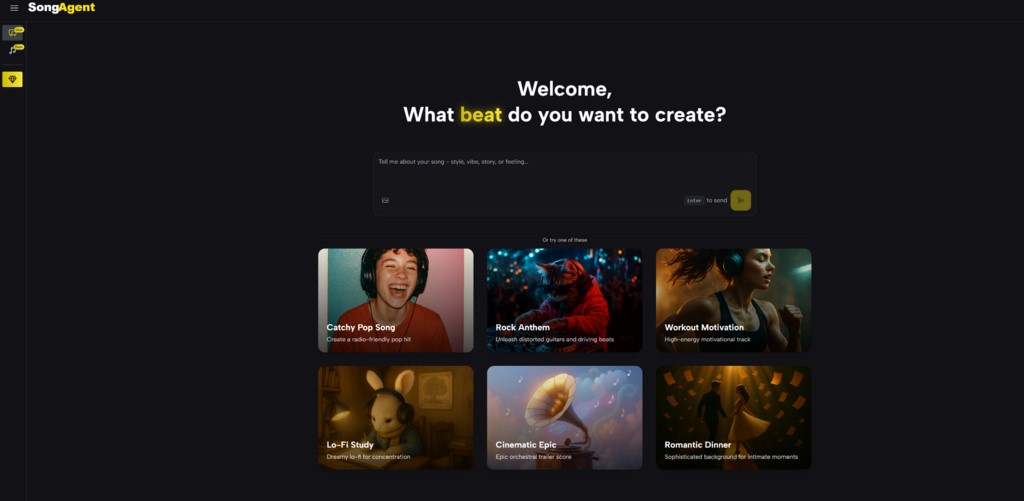
One-off tracks are easy to generate. What’s hard is creating *a consistent sound*—the kind you need for a channel, a brand, or a product that publishes weekly. The usual problem goes like this: you make one track you like, then you try to recreate it for the next episode, and suddenly the vibe shifts. In my own workflow, the missing ingredient wasn’t creativity—it was a system for consistency. That’s where AI Music Agent started to feel less like a “generator” and more like a production assistant: you define the sonic identity, verify it as a blueprint, then produce variations without losing the thread.

Why Consistency Is the New Competitive Advantage


If you’re publishing regularly, music becomes part of your signature. The moment your sound changes too much, your work feels less cohesive—even if each track is “good.”


Common pain points

  • You spend too long “re-finding” your style every time.

  • Your prompt changes slightly and the output drifts.

  • You can’t scale production across different formats (short/long/ambient/energetic).


What I liked about the blueprint workflow

It makes consistency explicit: instead of hoping your next prompt matches your last, you align on the same musical plan.


A simple analogy

Most generators are like improvising every episode. AI Music Agent is like keeping a show bible.


The show-bible effect

You’re not repeating the same song—you’re repeating the same *rules*:

  • tempo range

  • instrumentation palette

  • structural rhythm (how the track builds and resolves)

  • emotional arc


Result

Your series sounds intentional, not accidental.


The Workflow: From “Sound Identity” to a Whole Library


1) Define your core sound once

When I want a consistent vibe, I start with one “master prompt” that describes:

  • genre and texture

  • energy curve

  • key instruments

  • what the music should avoid (too busy, too dark, too aggressive)

2) Review a blueprint before generating

This step matters for series work because it catches drift early:

  • If the blueprint adds instruments you don’t want, you remove them.

  • If the tempo is wrong, you fix it before it becomes the whole track.


3) Generate variations on purpose

Once the blueprint matches your sound identity, you can request variations without breaking cohesion:

  • “Same palette, but lighter energy for intro segments.”

  • “Same style, but more tension for a mid-episode transition.”

  • “Same groove, but remove melodic lead—make it more background.”


4) Export versions for different platforms

A library needs formats:

  • 15s, 30s, 60s edits

  • instrumental beds

  • punchy stingers

  • longer ambient versions


A Comparison Table Focused on Series Creation


What you need for a series AI Song Agent Typical Generator Manual DAW workflow
Keep a consistent sound identity Blueprint helps enforce it Often drifts prompt-to-prompt Yes, but time-heavy
Produce multiple variations quickly Designed for iterative requests Often “re-roll” dependent Slow unless templated
Generate edits for multiple durations Natural to request variants Sometimes awkward Precise, but manual
Scale output without a full studio setup Strong fit Moderate fit Requires skill/time
Best use case Content pipelines, brand libraries Quick experiments Final mix/master and deep control

How I Structure Prompts for Repeatability


A) The “Sound ID” prompt (master)

Use it like a preset you return to:


  • Identity: “warm, modern, minimal”

  • Palette: “tight drums, soft bass, airy pads”

  • Arc: “calm intro → confident lift → clean resolve”

  • Boundaries: “no harsh leads, no overly complex fills”


B) The “Episode prompt” (variant)

Then add only what changes:

  • “more energy”

  • “more tension”

  • “more playful”

  • “shorter ending”

  • “make space for voiceover”


Example variant prompt

“Keep the same sound identity, but make it 30 seconds with a stronger lift at 12 seconds. Less melodic lead—leave room for narration.”


Where AI Music Agent Saves Time (In a Non-Hyped Way)


Less time translating feelings into structure

The blueprint step turns fuzzy ideas into track architecture. That’s usually the step that costs me the most time in a series workflow.


Fewer “almost right” outputs

When I can correct the plan before generating, I waste fewer runs on tracks that were never going to fit the series anyway.


Better collaboration

If you work with editors or clients, the blueprint is easier to share than a vague prompt:

  • “We’re keeping this instrumentation and tempo.”

  • “We’re lifting here, not here.”


Limitations You Should Expect


The library still needs curation

Even with a consistent approach, not every generation is a keeper. I treat it like writing: you draft more than you publish.


The more specific your style, the more iteration

Hybrid genres and signature vocal hooks may take more generations to land. In my testing, simpler beds and cinematic textures stabilize faster than “radio-perfect” vocal pop.


Audio context matters

A track that sounds great alone might clash under voiceover or SFX. You may need alternate mixes or simpler arrangements for dialogue-heavy content.


A Realistic Mini-Workflow for Creators


1) Create 1 “anchor track”

Get the sound identity right.


2) Create 6–10 variations

Same palette, different energy levels and durations.


3) Tag and reuse

Keep notes like:

  • “best for intros”

  • “best under narration”

  • “best for reveals”

  • “too busy—use only as montage music”


4) Refresh monthly

Instead of starting from scratch, evolve the blueprint gently:

  • new instrument texture

  • slightly different tempo range

  • seasonal mood shift


Where This Approach Fits


AI Music Agent is a practical middle layer:

  • faster than full DAW production,

  • more consistent than “prompt roulette,”

  • flexible enough for a content library.


Final Take

If your goal is a repeatable sound—music that feels like your channel or *your brand*—the blueprint-first approach can be the difference between “random good tracks” and a cohesive music system. AI Music Agent won’t remove the need for taste, but it can reduce the time you spend rebuilding your sound from zero every week.


Continue Reading

Categories

Trending